How to Backside 180 on a Wakeboard
Learn the Backside 180 behind the boat and at the cable: the approach, when to turn, the handle, the landing, and the mistakes that put you on your heels.
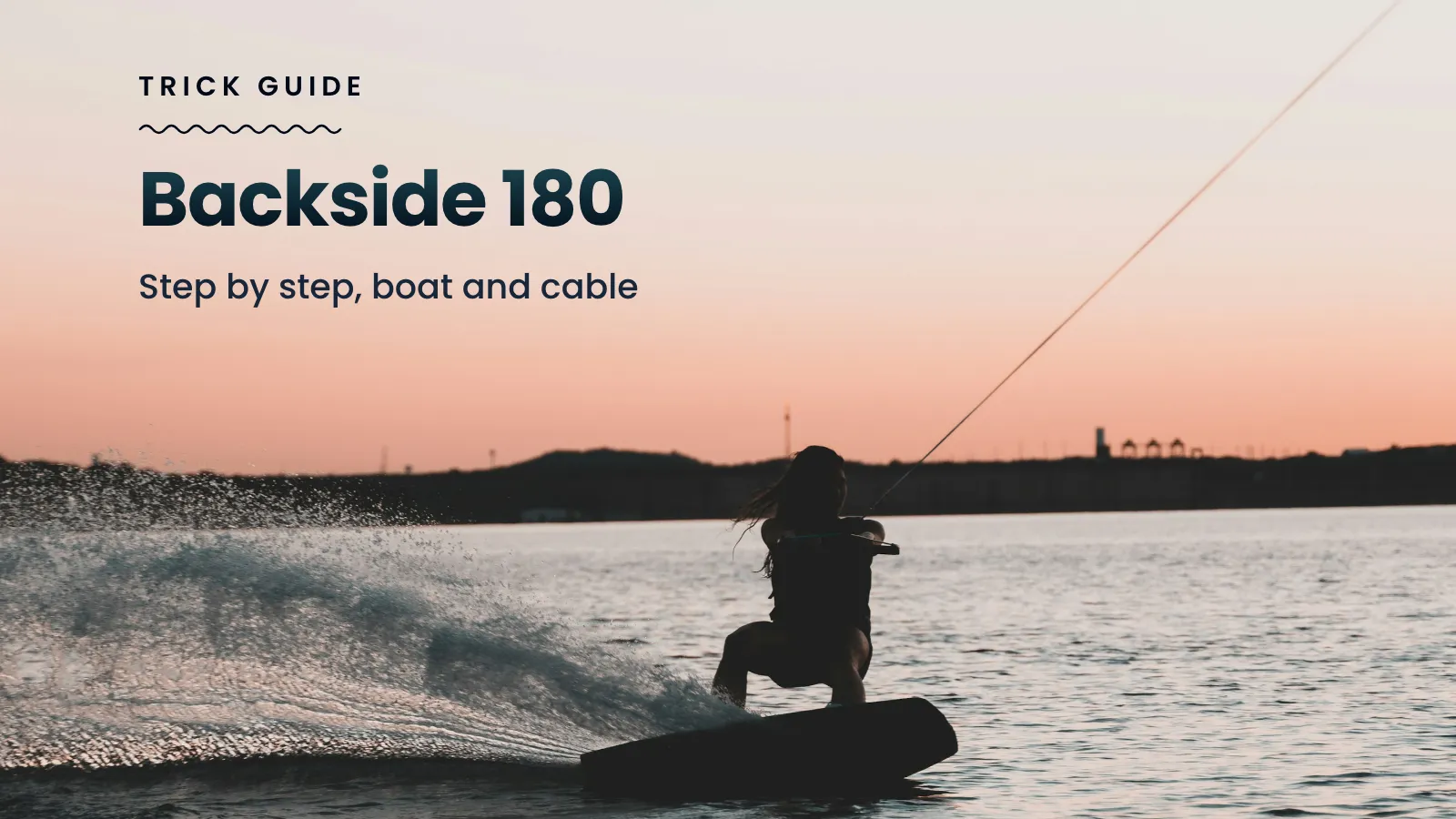
The Backside 180 is a half spin where your back turns toward where you're going first, so you land riding switch. It's one of the classics: Shaun Murray calls it one of his favorite tricks and does it off anything, from an ollie in the flats to wake to wake. If you can jump the wake cleanly and ride switch, you're ready for it.
Before you start
- A solid wake jump on the edge you'll spin from: wake to wake behind the boat, or a straight air off a small kicker at the cable.
- Riding switch. Every 180 lands switch, and most Backside 180 struggles come down to switch riding. Ride switch in every set.
- Riding blind. You land with your back to where you're going, so get comfortable riding blind before you try it.
- The handle pass, practiced on land.
Step by step
- Approach like a normal jump. A progressive, medium cut from about three quarters of the way out behind the boat, or a mellow edge with the board flat up the kicker at the cable. Keep the handle low and close, at your front hip.
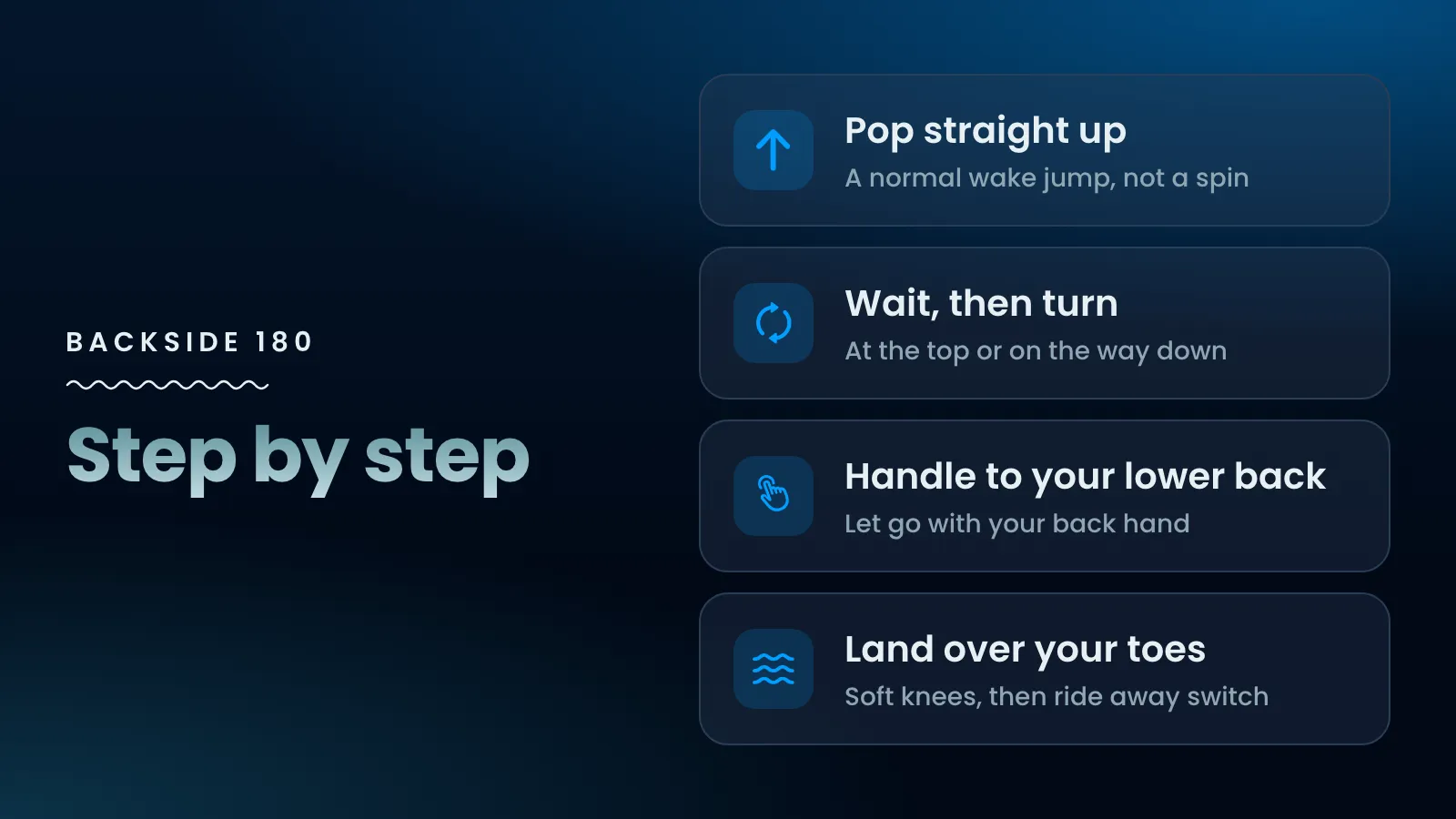
- Pop straight up. Stand tall off the top of the wake and go up, not into the spin. Off a kicker, keep the first ones small: a lower jump means a softer landing while you're blind.
- Wait. Don't spin off the wake. Get into the air first, then turn at the top or on the way down. You have more time up there than you think.
- Bring the handle behind you. Pull it across to the small of your back, toward the hip that becomes your new front hip, and let go with your back hand.
- Spot the landing. Look at the water you're about to land on as you come around.
- Land over your toes. Chest over your toes and knees soft, on the downside of the wake.
- Ride away. Edge away from the boat or the cable right away, then pass the handle once the rope slackens, or ride out blind.
Coaches teach the turn in different ways, so try the one that clicks for you:
- Pull the handle to your lower back. JB O'Neill starts the spin with the handle, ripping it all the way to the small of his back, and lands blind before passing.
- Keep the handle still and turn your hips. Shaun Murray's way. He spots the whitewash or the top of the second wake and watches it pass under him.
- Turn your lower body first. Brandon Judd leads with the board and hips, keeps his eyes on the wake, and lands with both hands on the handle behind his back, which leaves him more ways out.
Boat vs cable
Behind the boat, start slow. Learn the spin between the wakes at about 12 mph (19 km/h), then take your first wake to wake on a shorter rope, around 45 to 50 ft (14 to 15 m), with the boat as slow as it can go while still throwing a clean wake. Let the rope out and speed up a little at a time from there. Cut out hard so the rope pulls less, and land high on the downside of the wake so you ride down it.
At the cable, the air comes from a kicker or an ollie. Take the kicker with a mellow edge and enough speed to carry you slightly away from the cable. The cable pulls from above, so keep the line tight in the air with the handle at your front hip, then bring it to your lower back on the way down. After landing, lean away from the cable and edge away switch.
Heelside vs toeside
The heelside Backside 180 is the one most riders learn first. You ride away switch on your toes, and the risk is the back edge: falling backwards on landing, which makes riders over-rotate out of fear.
The toeside Backside 180 feels more awkward behind the boat, because the takeoff gives you no momentum into the spin. Leave a little room between your hips and the handle on the approach, then pull it slowly to your back at the lip: too early sticks you to the wake, too late makes the pass hard. You land on your heels, so keep your eyes back toward the wake. Off a kicker it's easier, since the slack makes the early pass easy.
Common mistakes
- Spinning off the wake. You lose your pop and your control. Go up first.
- Landing on your heels or your butt. Your chest stayed back. Get it over your toes and look at your back foot as you land.
- The rope unwinding you. Too much line tension. Cut out harder, land high on the downside, and keep the handle tight to your back.
- Over-rotating. Usually fear of the back edge. Trust the landing and spot it.
Stay safe
- Learn it low and slow, between the wakes or on a small kicker, so the mistakes don't hurt.
- Mind your shoulder. With the rope behind your back, a sudden pull can yank your arm. A hard cut out keeps the line slacker.
- Let go when you're falling backwards, rather than fighting it.
Video tutorials
Shaun Murray's How To Make Backside 180's (Not Scary) takes it from a powerslide behind the boat to wake to wake, with speeds and rope lengths:
JB O'Neill's How to Backside 180 off a kicker covers the cable: the approach, a small pop, patience, and landing blind:
What to learn next
- More Backside 180s: the other edge, switch, and off anything, from a powerslide to the boat's roller.
- Grabs: back-hand grabs such as indy or tail before the handle pass, then front-hand ones.
- Bigger spins: the Backside 360, where a clean handle pass pays off.
- Blind tricks: once you land Backside 180s, you're ready to take a Backroll to blind.
Tricks built on it
The Backside 180 sits inside some of the sport's best-known variations. The tootsie roll, credited to Shane Bonifay, combines a front roll with it. The Backside 180 rewind spins backside and comes back the way it came off a kicker. And at Cable Ski Cairns in 2015, Busty Dunn took the same direction of rotation to a toeside Backside 1260.
Track it with Wake
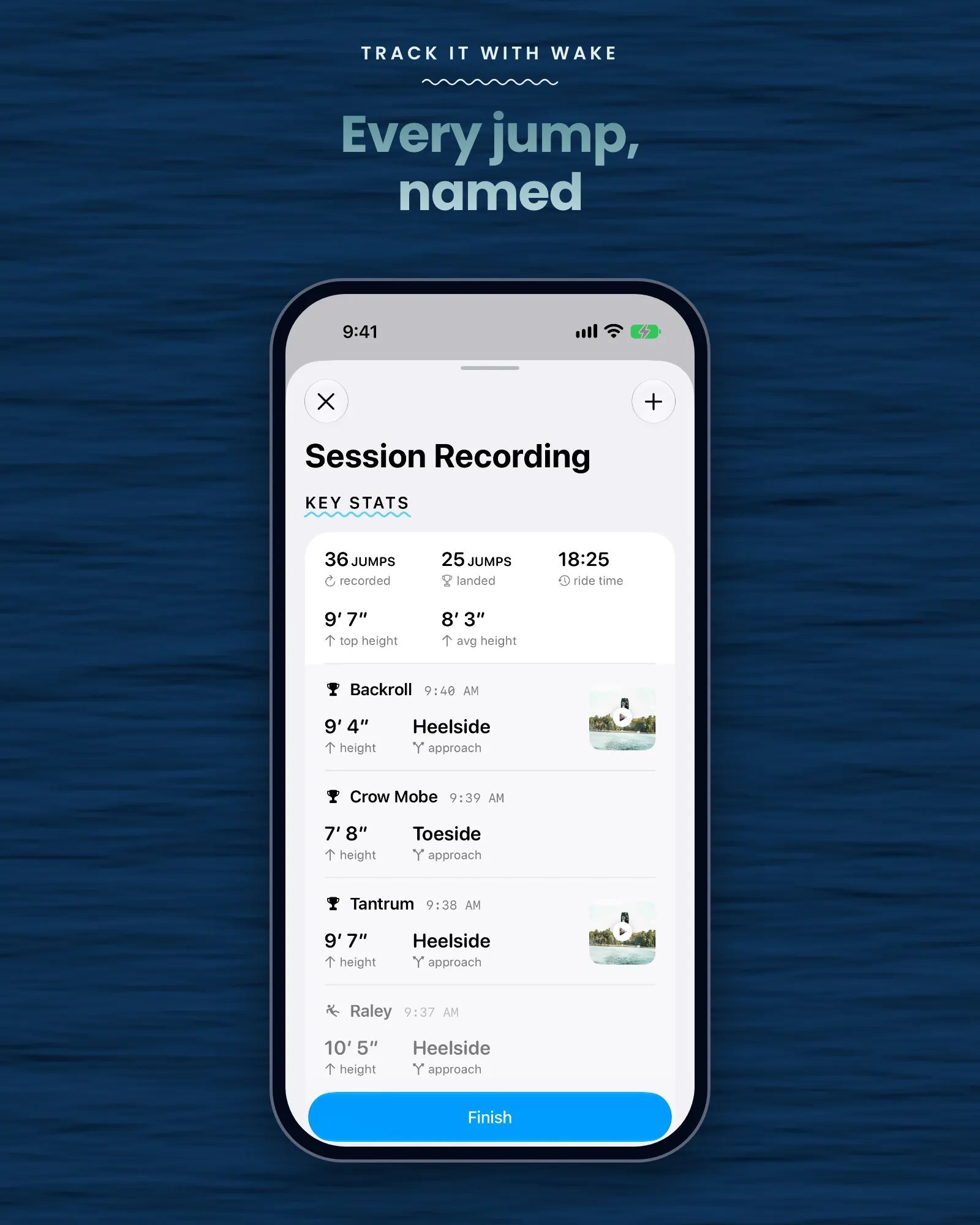
Wake recognizes the Backside 180 from your jump and logs it in your session with its height and approach, so you can see your attempts add up over a season. It might not get every jump right, and you can change the trick on a jump in a couple of taps.