How to Wakeboard at a Cable Park for Beginners
Your first day at a cable park: what the park rents you, the dock start step by step, turning around, the corners, and what to do after a fall.
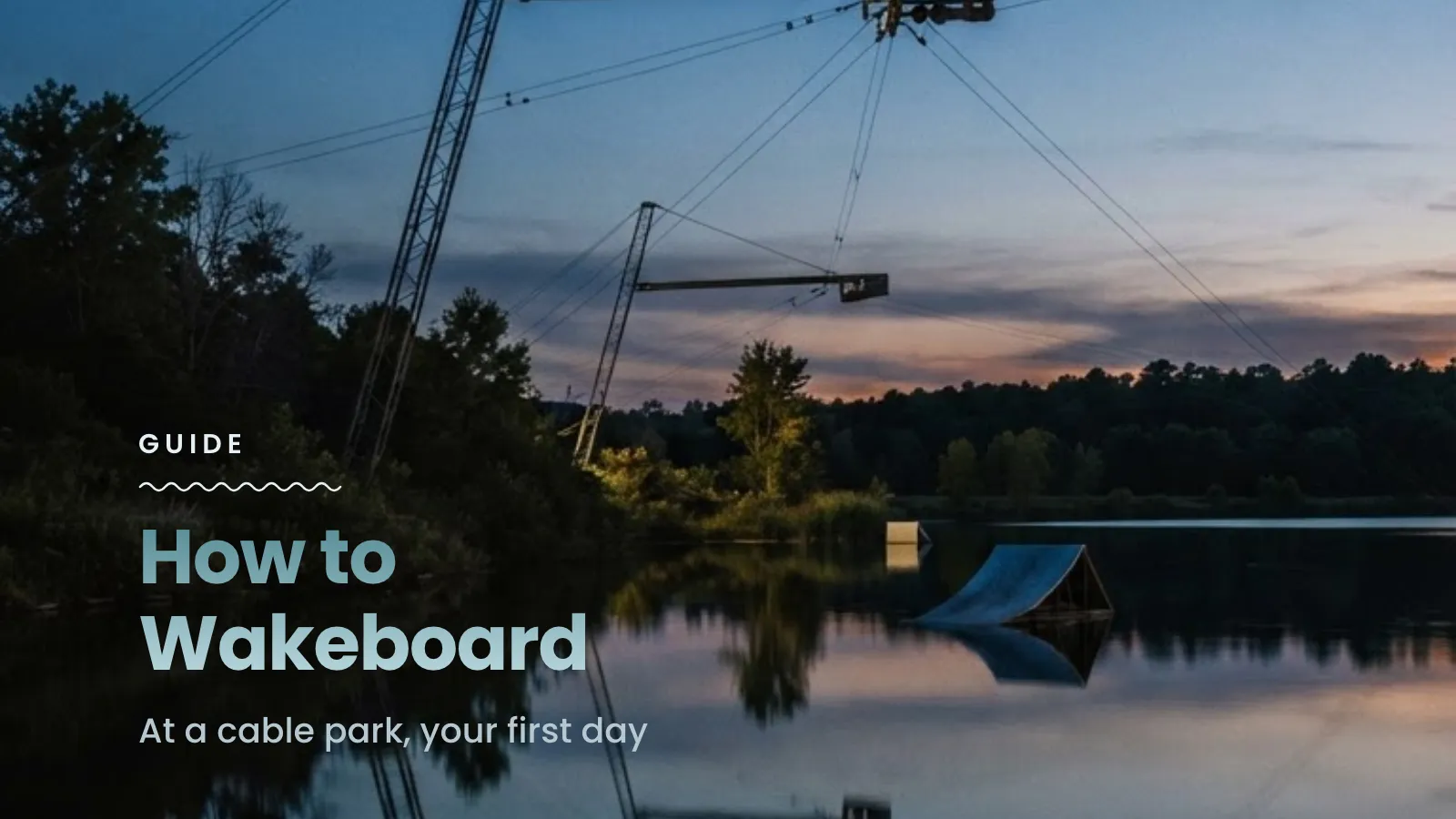
A cable park is the easiest place to learn to wakeboard: an overhead cable pulls you around the lake, there's no boat to drive, and the pull from above helps you up. This guide takes you from the start dock to your first full lap. Learning behind a boat instead? Read how to wakeboard behind a boat.
What you need
- A life jacket. Parks rent them if you don't have your own. Some only allow certain types, so check the park's rules before you bring yours.
- A board with bindings. Parks rent these too. Bindings should be snug, not painful.
- A helmet. Most parks require one, and lend it if you don't have your own.
- A wetsuit if the water is cold. Some parks rent those as well.
Tell the staff it's your first time. They'll start you on the right cable and help you off the dock.
Two-tower or full-size cable
A two-tower cable runs one rope back and forth between two towers. An instructor stays close and controls the speed, there's no wake in front of you, and the steep angle of the rope helps you up and softens your falls. It's an easy place to start.
A full-size cable runs around the lake on usually five towers and pulls several riders at once, at a steady speed. You can learn on one too: tell the operator it's your first time. Some parks hold beginner sessions, when they slow the cable down to make getting up easier.
Find your front foot
Wakeboarders ride regular (left foot forward) or goofy (right foot forward). Have a friend give you a gentle push from behind when you're not expecting it: the foot you step out with is your front foot.
Get up: the dock start
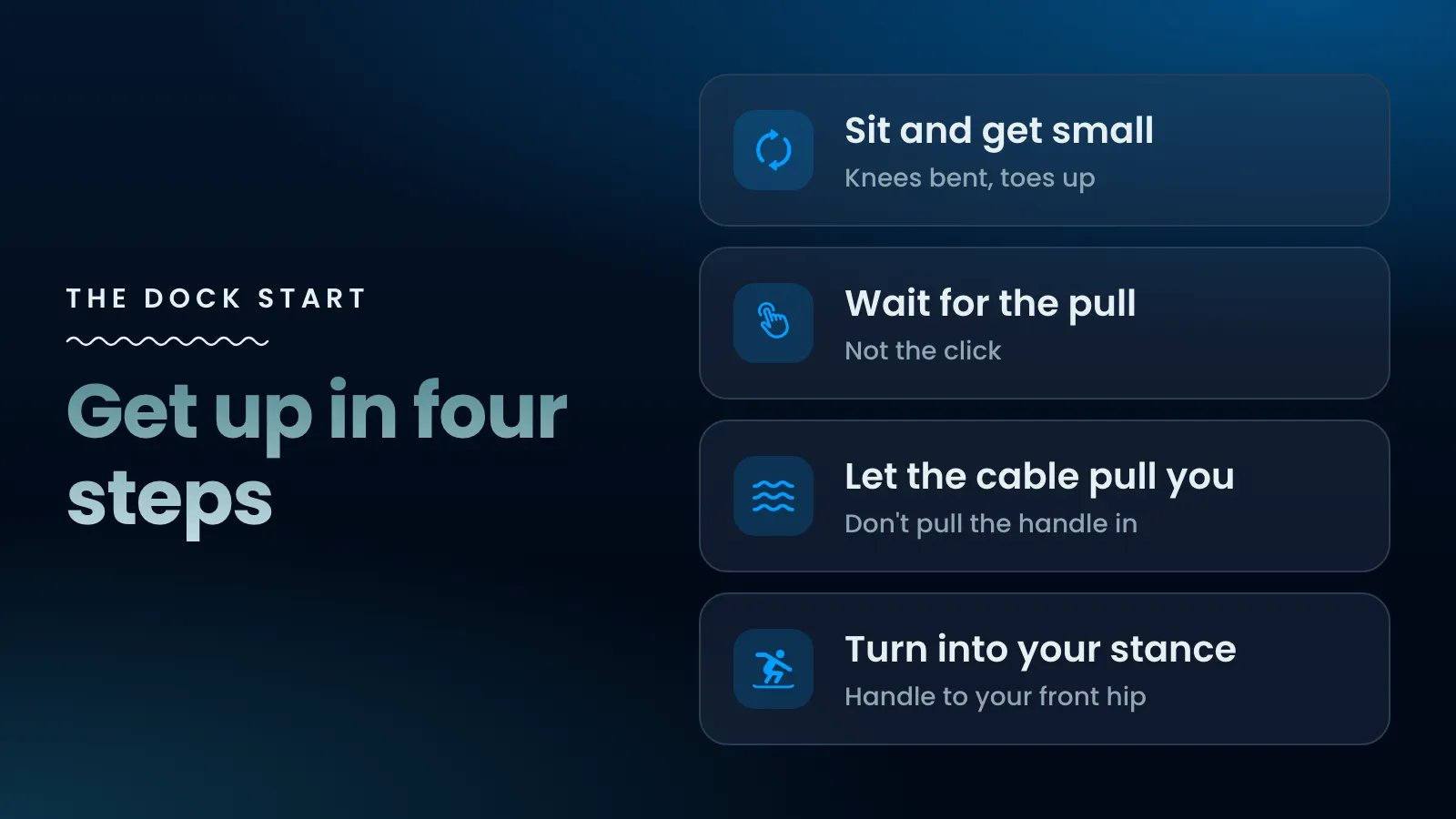
- Sit on the edge of the start dock. Put your bindings on facing away from the water, then turn and sit. Sit far enough back that you can't slide off early.
- Get small. Knees bent toward your chest, toes up so the board's front edge stays out of the water, and the handle in front of you.
- Wait for the pull. The rope clicks onto the carrier about a second before it goes tight. Don't jump off at the click: let the cable pull you off the dock.
- Let the cable do the work. Keep your knees bent and your toes up, and resist the urge to pull the handle toward your chest. If you feel yourself falling back, bring your chest forward over the board instead.
- Stand up slowly once the board is riding on top of the water. Bring the handle to your front hip, which turns the board sideways into your stance, and lean against the rope with your knees soft.
Coaches differ on the arms. John Haile keeps the elbows straight from start to finish. JB O'Neill holds the handle tight against the front hip and lets the arms out slowly as the cable pulls, like shock absorbers.
Ride and turn around
Once you're up, keep your knees soft and the handle low by your front hip. Ride under the line of the cable and practice steering to one side and back: put pressure on your heels for one edge and your toes for the other.
On a two-tower cable, you turn around at the end of the line. As you get close, look at a point on the shore to one side and carve toward it, as if sitting into a chair. Keep carving: the rope swings you around like a rope swing and sends you back down the lake. Most people need several tries.
Take the corners
The corners of a full-size cable catch out everyone at first, even riders who know the boat. How hard the rope pulls you depends on where you are when the carrier goes around the tower.
- Ride directly under the cable as you come up to the corner.
- Edge out late toward the buoys under the corner, with one steady edge. Edging out too early leaves you slow by the time you get there.
- Turn back toward the cable as the carrier goes around the tower. Follow the cable's new direction like a road. If you keep carving outward, the rope whips you around.
On a typical five-tower cable, the first three corners turn gently and the last two much sharper, so give those your full attention.
After a fall
A full-size cable keeps running for the riders behind you when you fall.
- Look back up the cable straight away for riders and handles coming toward you. If one is about to hit you, duck under the water.
- Keep your board and helmet on until you're out of the line.
- Then take the board off, push it ahead of you and swim to the nearest shore, away from the center island. Walk back to the dock and get back in line.
On a two-tower cable, the operator usually brings the rope back to you, and you start again from the water.
Common mistakes
- Jumping off the dock at the click. The board sinks before the rope is tight and you go over the front. Wait for the pull.
- Pulling the handle in. You end up sitting in the water. Keep your arms long and your chest forward.
- Dropping your toes. The board's front edge digs in and dives. Keep your toes up until you're riding on top.
- Standing up too fast or straightening your legs. Stay small until the board is on top of the water, and keep your knees bent.
- Edging out too early for a corner. You arrive slow and the rope yanks you. Edge out late.
Stay safe
- Wear your life jacket and helmet every time.
- Never wrap the rope around your hand, arm or body. Let go of the handle if things go wrong.
- Follow the park's rules and the staff's briefing.
Video tutorials
West Rock Wake Park's Wakeboarding 101: Getting Started at the Cable Park walks through a two-tower lesson, from land training to turning around:
JB O'Neill's HOW TO - DOCKSTART - SITTING - WAKEBOARDING covers the sitting dock start and the mistakes that keep people from getting up:
West Rock Wake Park's How To Round Cable Park Corners shows from above why the corners pull the way they do, and the line to take:
What to learn next
Once you can ride a full lap, try a Surface 180 and riding switch, then the Ollie, the first trick of the cable. After that, try a straight air off a kicker.
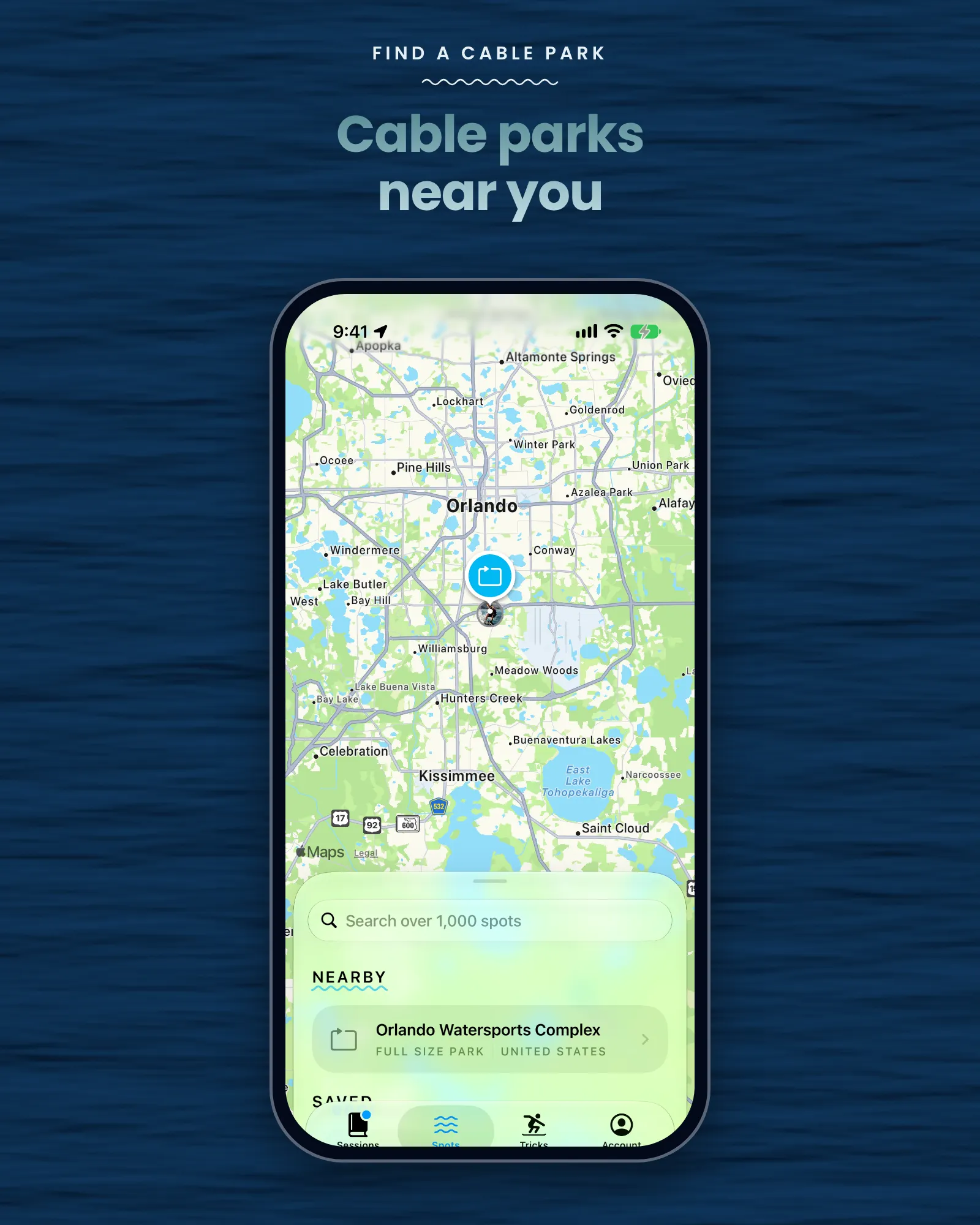
Find a cable park to learn at with Wake
Wake's Spots map shows over 1,000 wakeboarding spots, cable parks among them, with each spot's weather forecast and contact info. Search it for a cable park near you, and log your first sessions there with Wake.