How to Wakeboard Behind a Boat for Beginners
Your first day behind a boat: what to bring, the deep water start step by step, the right speed, how to ride once you're up, and the mistakes to avoid.
Most people get up behind a boat within a few tries, once they stop fighting the pull. The whole trick of the first day is doing less: curl up, keep your arms straight, and let the boat do the work. This guide takes you from the swim step to your first turns. Learning at a cable park instead? Read how to wakeboard at a cable park.
What you need
- A fitted life jacket. Wear it every time, and make sure it's snug and doesn't restrict your arms. If you don't have your own, most wakeboard schools and boat charters lend one.
- A beginner board. Longer boards with a smooth, continuous rocker are the steadiest and the easiest to turn. A board that's too small makes learning harder, a slightly large one hurts less. The best wakeboards by rider type covers sizing and the 2027 beginner boards. Schools and charters usually have boards to borrow too.
- Bindings that are snug, not painful, with your feet about shoulder-width apart and angled out a little.
- A tow rope and handle that don't stretch.
- A driver and a spotter. Agree on hand signals before you get in: thumbs up for faster, thumbs down for slower, a hand up to stop, and crossed arms over your head after a fall to say you're OK.
- A wetsuit or rash guard if the water is cold.
Find your front foot
Wakeboarders ride regular (left foot forward) or goofy (right foot forward). The easiest test: stand relaxed on land and have a friend give you a gentle push from behind without warning. The foot you step out with is your front foot. If you're still unsure, you'll usually settle into one on your own once you're up.
Get up: the deep water start
- Shorten the rope. A shorter rope pulls you more upward, which makes standing easier. Even shortening it to around 30 ft (10 m) helps on the first pulls. Let it out again once you're getting up every time.
- Slide in, don't jump. Scoot off the swim step so you don't fall back into the boat.
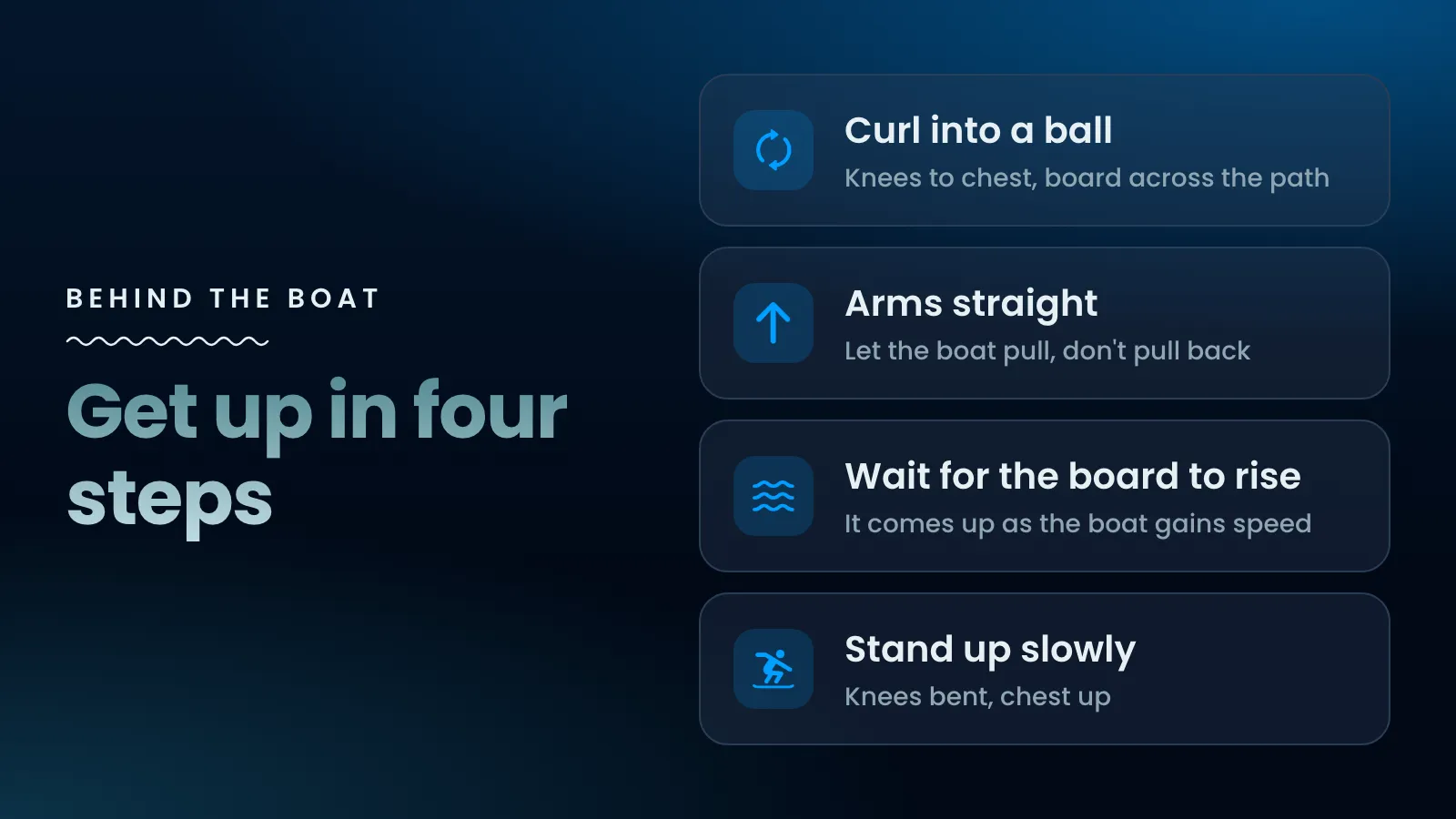
- Curl into a ball. Float on your back with the board on your feet, pointing across the boat's path, and the rope between your feet. Pull your knees to your chest and keep your arms straight, resting on or beside your knees.
- Signal, then let the boat pull. Don't pull with your arms, push with your legs or lean back: the board turns into a plow and the water pushes back hard. Stay small.
- Wait for the board to come up. It rises to the surface as the boat gains speed. Stand up only when you're riding on top of the water. Standing too early is the most common mistake: the board sinks and you fall forward.
- Rise slowly. Keep your knees bent, chest up and arms straight. Bring the handle to your front hip, and turn your lead hip toward it so your front foot points at the back of the boat.
Coaches differ on one detail, the handle. Shaun Murray keeps it completely still and lets the board go under the surface like a wing, as long as your toes sit a little higher than your heels. Others bring it to the lead side as soon as you're up.
Speed and the driver
Start slow. A beginner gets up at around 10 to 20 mph (16 to 32 km/h), and stays under 20 mph (32 km/h) while learning to ride. The driver goes from idle to a smooth, gradual throttle, never hammering it, and keeps the rider straight behind the boat. Getting up in a turn is much harder.
Ride, turn and cross the wake
Once you're up, keep your knees soft, your chest tall and the handle low by your front hip. Don't lock your front leg: bent knees are your shock absorbers.
- Heelside: put pressure on your heels so the back edge of the board digs in. It's the easier edge and carries you out across the wake.
- Toeside: put pressure on your toes. It's harder. Stand fully tall, arch your back a little and lean against the rope. If you break at the waist you'll fall on your face, and leaning in the direction you want to go gets you stuck.
- Crossing the wake: ease out gently from directly behind the boat and let the board glide over. Switching edges too fast lets the rope go slack, and the jerk when it tightens can knock you down.
Common mistakes
- Pulling with your arms. It tires you out. Keep them straight.
- Straightening your legs. You push the tail of the board down and fight the water. Keep your knees bent the whole time.
- Standing up too fast. Stay small until you're on top of the water.
- Pushing a foot out. Your board shoots sideways. Keep both knees flexed evenly.
- Locking your legs or rounding your shoulders once you're up. Stay loose and breathe.
- A driver who hammers the throttle. Talk to your driver first, and use your hand signals.
Stay safe
- Wear your life jacket every time, and have a spotter watch you.
- Never wrap the rope around your hand, arm or body. Let go of the handle if things go wrong.
- Warm up and drink water beforehand.
- Give yourself time. Most first-timers need several attempts.
Video tutorials
Shaun Murray's How To Get Up On A Wakeboard: 3 Easy Tips explains the still handle and the wing, and what the driver should do:
JB O'Neill's Wakeboarding: How to Get Up! Boat shows the ball position and the mistakes that keep people from standing:
What to learn next
Ride both edges and cross the wake each way. Then, over your next few sessions, try a jump from heelside and toeside, a Surface 180 and riding switch.
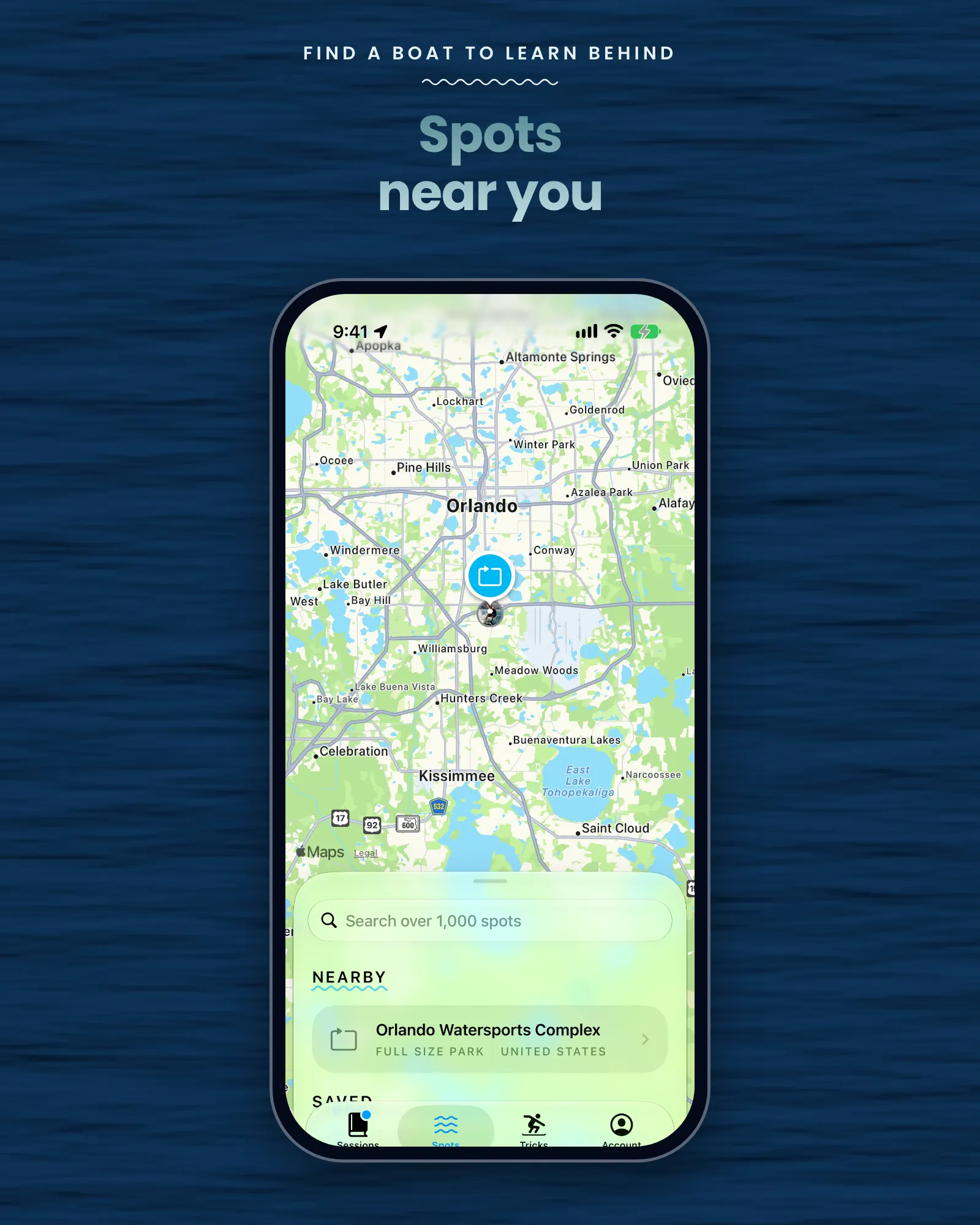
Find a boat to learn behind with Wake
No boat of your own? Wake's Spots map shows wakeboarding spots near you, boat charters among them, so you can find one to learn at. Once you're riding, Wake logs every session, so you can see your riding add up from the first day.